Scenario Diagnosis
We understand the context of the municipality/institution, target audience, objectives, and local challenges to recommend the most suitable program.
01

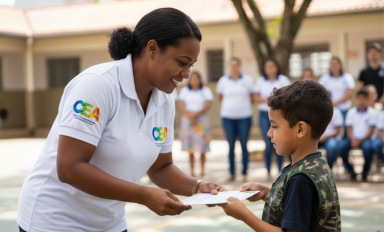
CEA develops programs, projects, and institutional cooperation to strengthen environmental education and citizenship, with a clear methodology and organized execution.


Information, partnerships, and support for project implementation.
Send your request and we will return with guidance and partnership proposals.
Institutional stability and public credibility
The Center for Environmental Education and Social Responsibility – CEA is a Non-Governmental Organization (NGO), founded in 2012, dedicated to promoting environmental education, sustainability, and social development in various regions of Brazil.
Since 2015, CEA has been qualified by the Ministry of Justice as an OSCIP – Civil Society Organization of Public Interest, under the terms of Law No. 9.790/1999, a recognition that attests to its public utility, transparency, and social relevance.
Throughout its history, CEA has established itself as a reference in the execution of educational, socio-environmental, cultural, and social responsibility programs, impacting schools, communities, and public and private institutions.
Learn more about CEA

Educational actions and mobilizations that strengthen ecological citizenship and a culture of preservation.

Programs with structured content, collections, and methodologies to enhance learning and engagement.

Projects that guide the separation of recyclables, reduce impacts, and strengthen local environmental policies.

Initiatives with institutions and communities, promoting participation, belonging, and social transformation.

National
Target audiences • national operations
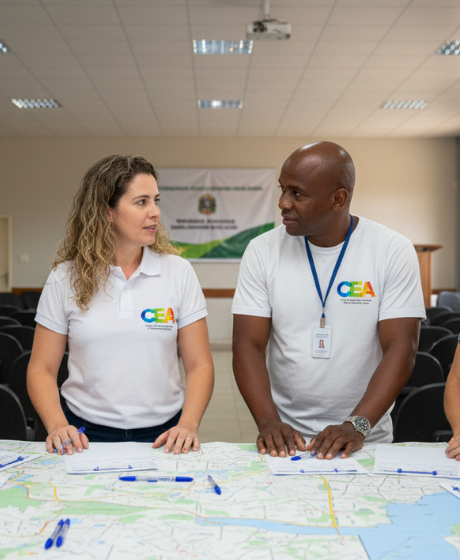
We serve city halls and municipal departments, environmental and regulatory agencies, public schools, specialized care institutions, companies, and social organizations. We create actions adapted to the territory, with accessible language and practical methodology, strengthening education, engagement, and behavior change.
We operate at the
municipal, state, and federal levels.
Initiatives with national reach

Early childhood reading with method and intent.

Educating to protect wildlife.

Ecological citizenship mobilizing schools and communities.

Correct waste separation and reverse logistics.
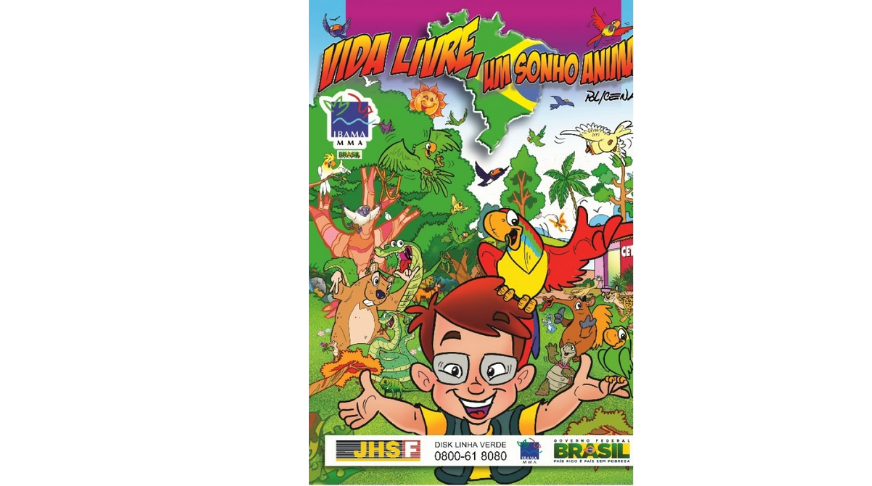
Poetically, some see nature as a book of living pages. In the case of the children's booklet "Vida Livre, um Sonho Animal" (Free Life, an Animal Dream), recently launched by IBAMA, children will have great fun with illustrated stories in comic book format. These stories discuss the importance of animals living free in nature and how the work of the Brazilian Institute of Environment and Renewable Natural Resources (IBAMA) is developed for the protection and conservation of species that make up the country's rich fauna.
A project aimed at elementary school children, the booklet was coordinated by IBAMA biologist Vincent Kut Loo, who saw the publication as a way to convey to children the importance of not keeping wild animals at home. "Children are of great importance today in raising awareness among adults and in the process of societal change, especially regarding the environment," he highlights. In a playful way, the characters show what happens to animals captured from wildlife traffickers—which is considered the third-largest illegal market in the world, behind only drugs and weapons—and seek to sensitize young readers to this serious problem and the importance of becoming animal defenders and multipliers of this idea.
Initially launched in the state of São Paulo, the IBAMA booklet will also be part of a nationwide campaign promoted by that federal agency. Students from the municipal school systems of São Roque and Mairinque will be the first to receive the publication. The initiative was partnered with JHSF, the company responsible for the Parque Catarina development in São Roque, which, in addition to sponsoring the edition, brought this novelty to students in the region.
Source: Jornal da Economia.
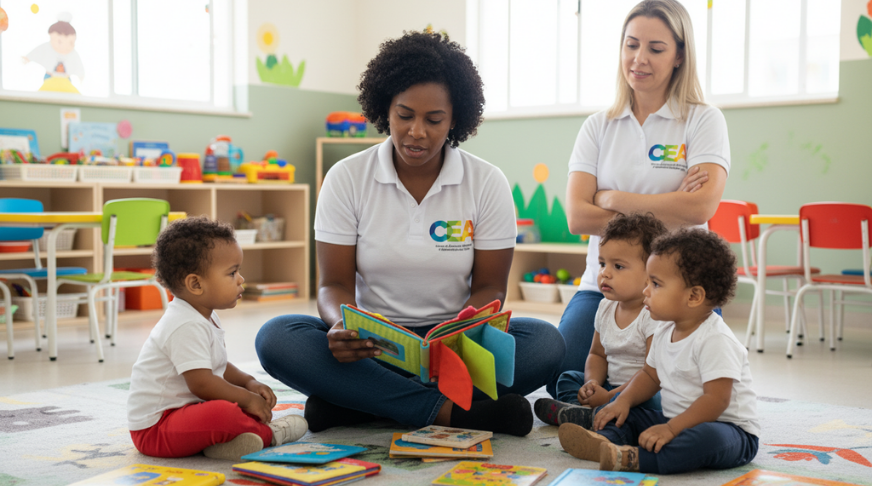
A program that provides a rich literary collection for babies and strengthens pedagogical reading practices in early childhood education. It includes training for educators with playful strategies aligned with contemporary educational guidelines. It promotes attention, listening, language, imagination, and the construction of a cultural repertoire from the earliest years. It supports schools in qualifying education with a focus on child development.
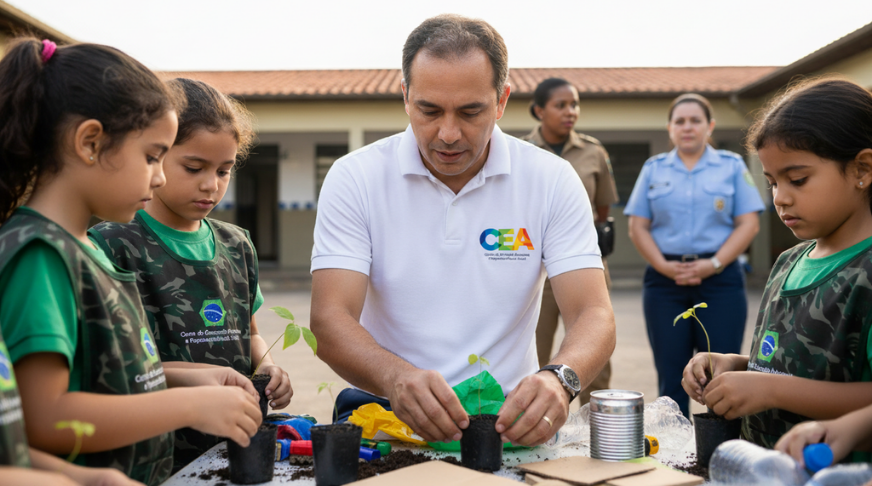
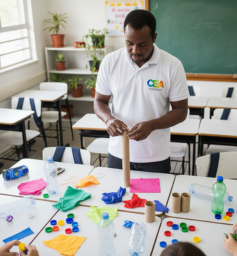
A structured initiative featuring Environmental Education Week, bringing together lectures, pedagogical activities, educational actions, and local mobilization. Conducted in cooperation with City Halls, Departments, Environmental Police, IBAMA, and partner institutions. At the end, students participate in a graduation ceremony and receive an Official Junior Environmental Agent Diploma. A program that strengthens self-esteem, responsibility, and socio-environmental engagement.
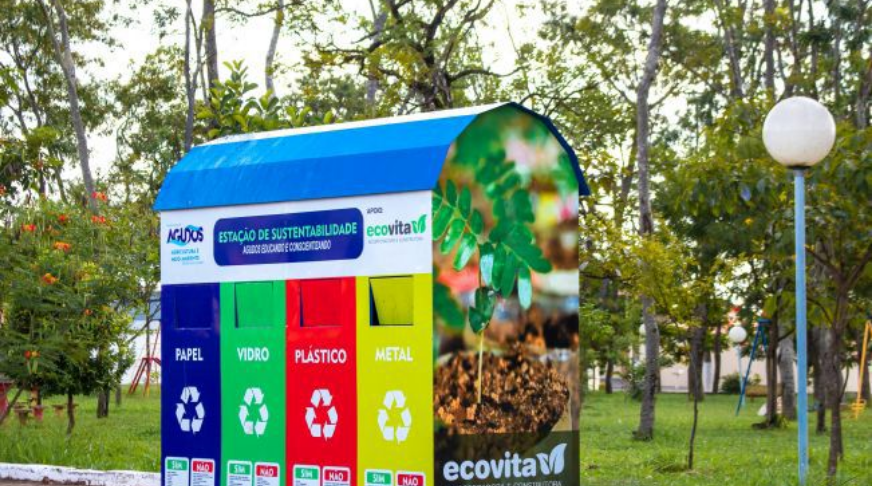
A program that builds and installs Sustainability Stations in strategic public locations, provided free of charge to municipalities. The stations guide the population on separating recyclables and ensuring correct disposal at eco-points and selective collection sites. It contributes to reducing environmental impacts, supporting public policies, and returning materials to the productive chain. It integrates actions aligned with ESG practices with community engagement.
Partnerships with CEA
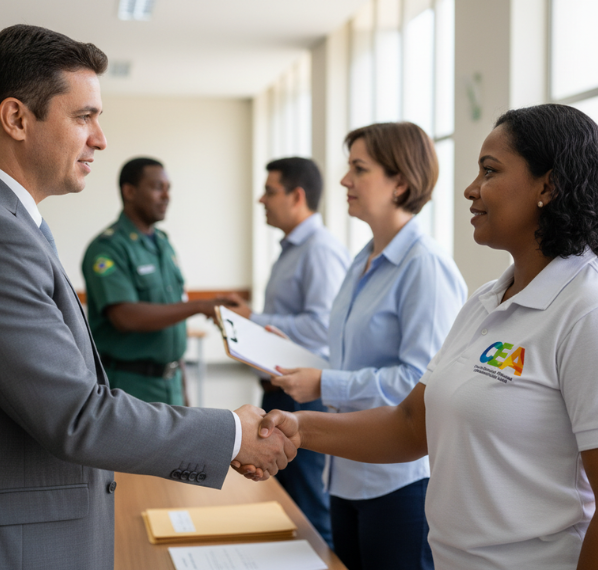

Partnerships and cooperation Institutional network
CEA has structured cooperation with environmental institutions, government agencies, and educational entities, strengthening the execution of projects in different regions of Brazil. Among the partners and cooperations are environmental and regulatory agencies, city halls, municipal departments, and specialized care institutions.
Environmental agencies
City halls and departments
Public education
Specialized care
Partnership process how it works

We understand the context of the municipality/institution, target audience, objectives, and local challenges to recommend the most suitable program.

We define the format, schedule, materials, involved team, and responsibilities, ensuring clarity and organization from the start.

We coordinate cooperation with departments, agencies, and partner institutions, aligning local support to strengthen execution.

We perform the activities, distribute materials, and conclude with records, recognition, and referrals for continuity.
Experience and impact why CEA
CEA combines solid institutional performance, experience in educational programs, and the capacity for cooperation at the municipal, state, and federal levels. We deliver replicable projects with a clear methodology and actions that engage schools, communities, and institutions to generate long-term social and environmental transformation.


Let's understand your scenario and recommend the ideal program for your city, school, or institution. Speak with CEA to request a proposal, align a partnership, and plan execution with organization and credibility.
CEA supports cities, schools, and institutions with educational programs and replicable projects, featuring a clear methodology and organized execution.

Office (Barueri/SP - Brazil)
Av. Marcos Penteado de Ulhoa Rodrigues, 1119 – 5th Floor


 Open your phone's camera and scan the QR Code.