
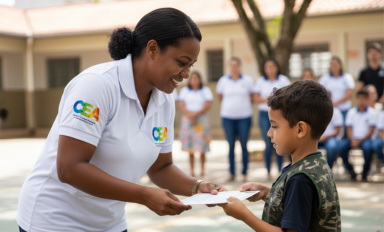
CEA develops programs, projects, and institutional cooperation to strengthen environmental education and citizenship, with a clear methodology and organized execution.
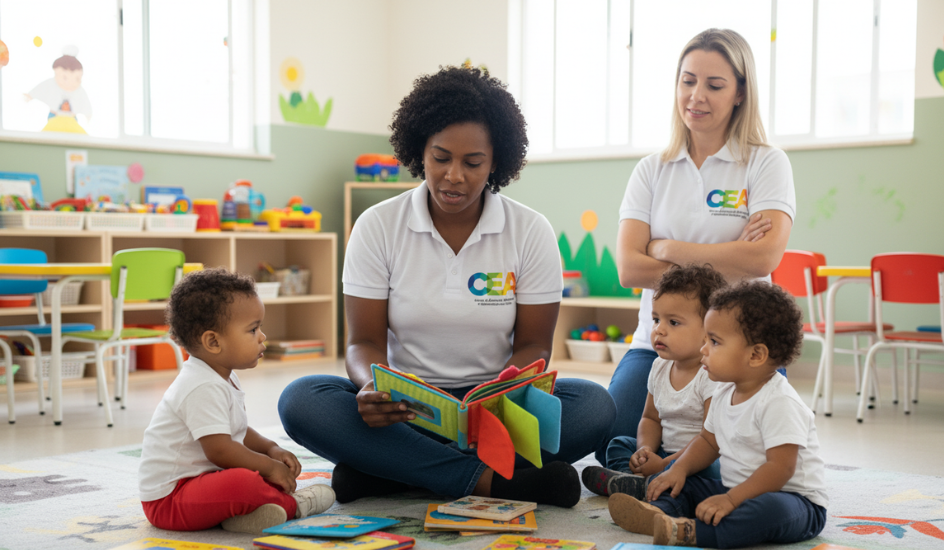
PEP is a CEA program aimed at promoting the quality of education for infants and young children through a rich and highly diverse literary collection. The initiative includes training for educators, focusing on intentional, innovative pedagogical reading practices aligned with child development. The objective is to strengthen teaching work from the early years of education.
Reading from the first months of life fosters attention, listening skills, vocabulary expansion, imagination, and cultural repertoire. Handling books and interacting with images, colors, and textures helps children symbolically explore the world around them. The program encourages a bond with reading as a pleasurable, continuous, and meaningful practice.
PEP provides books in various formats to meet the needs of early childhood: flap books, padded books, bath books, puppet books, and other playful options. These materials facilitate pedagogical mediation and allow for activities that encourage interaction, curiosity, and the construction of meaning. The collection supports both daily actions and specific reading projects.
The program includes teacher training to expand reading and mediation strategies, making actions more intentional, consistent, and rich in possibilities. Continuing education strengthens pedagogical practices and supports the learning rights of all children. The focus is to transform literary material into real development and learning experiences.
PEP dialogues with the principles of early childhood education and guidelines such as the BNCC, especially in the field of experience related to listening, speaking, thinking, and imagination. Reading activities can be planned to stimulate participation, communication, expression, and interest in stories and texts of different genres. This ensures pedagogical coherence and applicability in the school routine.
The program can be applied in schools, municipal departments, and educational institutions, with adaptation to the local context and the target audience. CEA guides the planning, collection organization, and teacher training to ensure effective use and continuity.
CEA supports cities, schools, and institutions with educational programs and replicable projects, featuring a clear methodology and organized execution.

Office (Barueri/SP - Brazil)
Av. Marcos Penteado de Ulhoa Rodrigues, 1119 – 5th Floor


 Open your phone's camera and scan the QR Code.