
CEA develops programs, projects, and institutional cooperation to strengthen environmental education and citizenship, with a clear methodology and organized execution.
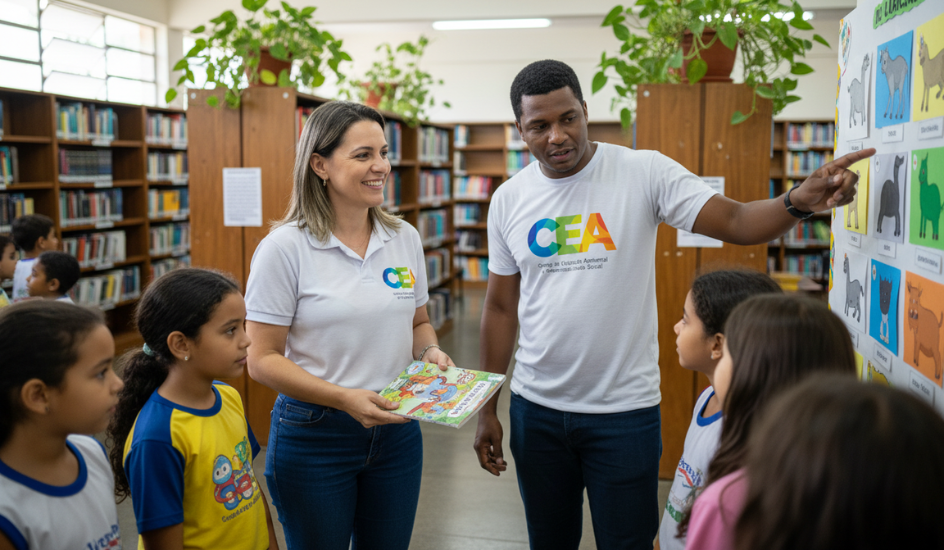
The AGAMIS Program is a CEA institutional initiative focused on environmental education for children and youth, developed in cooperation with City Halls and Municipal Secretariats, as well as partners such as the Environmental Police, IBAMA, and state agencies. The program promotes environmental awareness in schools and the community through a structured week of educational activities.
The program includes technical lectures, pedagogical activities, presentations, and educational actions on sustainability, environmental preservation, and ecological citizenship. During the week, thematic workshops are held involving students, teachers, and the local community. The format strengthens collective engagement and creates a more participatory and conscious school environment.
The core strength of AGAMIS is cooperative action: public authorities, environmental institutions, enforcement forces, education departments, and local partners working together. This structure increases the project's credibility and facilitates mobilization in schools, making the program stronger and more inspiring for students. The result is an integrated action with an institutional presence and high potential for impact.
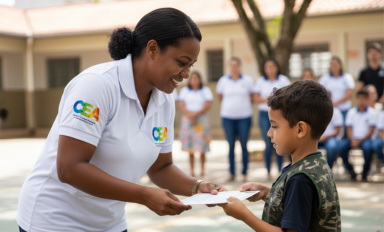
At the end of the activities, a graduation ceremony is held where each student receives an Official Junior Environmental Agent Diploma. The event usually features public authorities and institutional representatives, reinforcing the symbolic value of the recognition. This moment increases a sense of belonging, self-esteem, and responsibility, transforming the student into a multiplier of good environmental practices.
The program reinforces values of preservation, citizenship, responsibility, and social participation. Experience shows that students begin to act as permanent agents in disseminating sustainable practices at home and in the community. Furthermore, the program strengthens the school's ecological culture and contributes to actions aligned with ESG and local public policies.
CEA supports the planning of the week, timeline definition, partner mobilization, and execution of actions with a clear methodology. Implementation is adapted to the size of the network, local context, and the municipality's priorities.
CEA supports cities, schools, and institutions with educational programs and replicable projects, featuring a clear methodology and organized execution.

Office (Barueri/SP - Brazil)
Av. Marcos Penteado de Ulhoa Rodrigues, 1119 – 5th Floor


 Open your phone's camera and scan the QR Code.